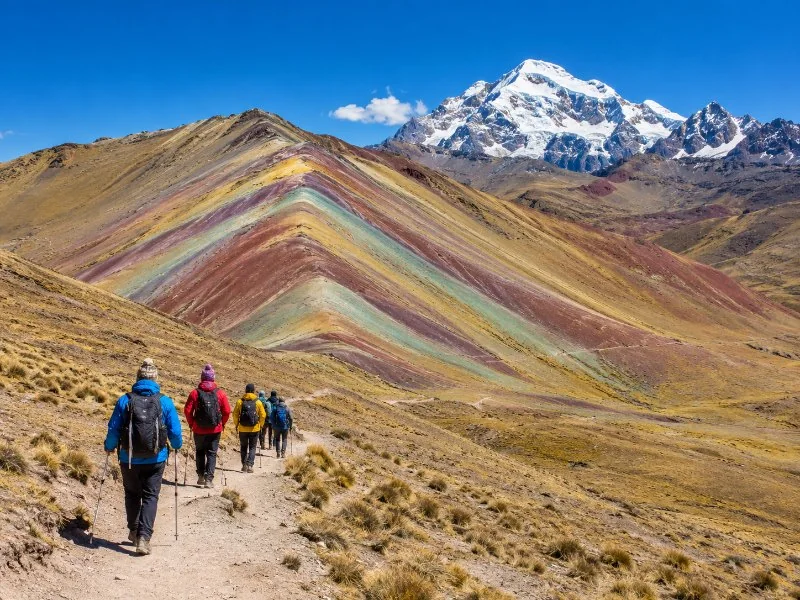
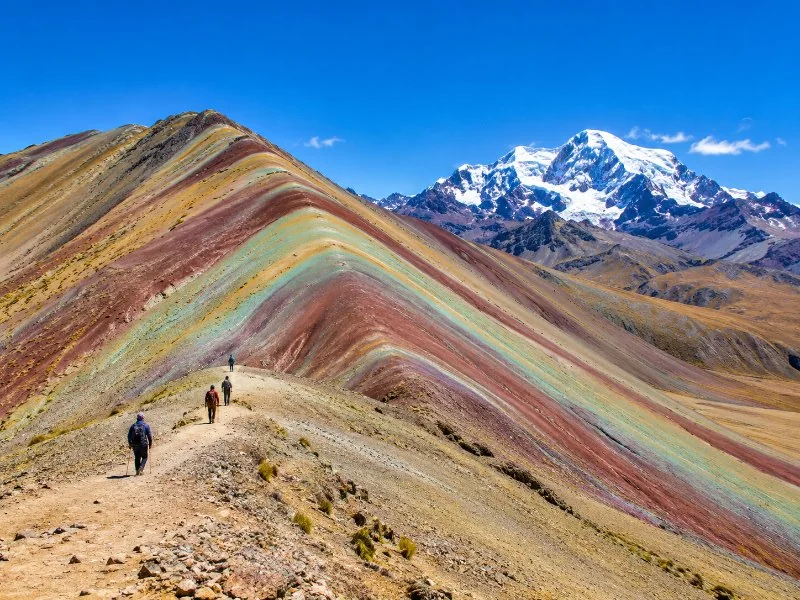
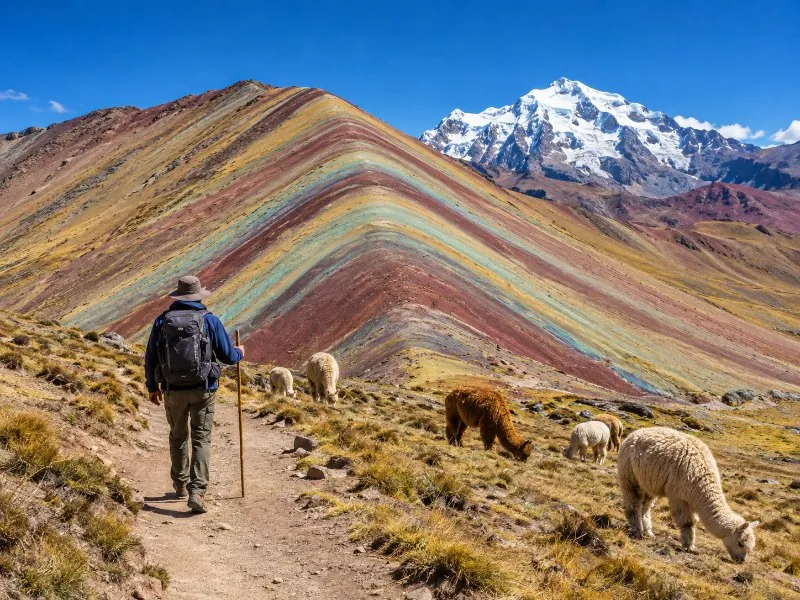
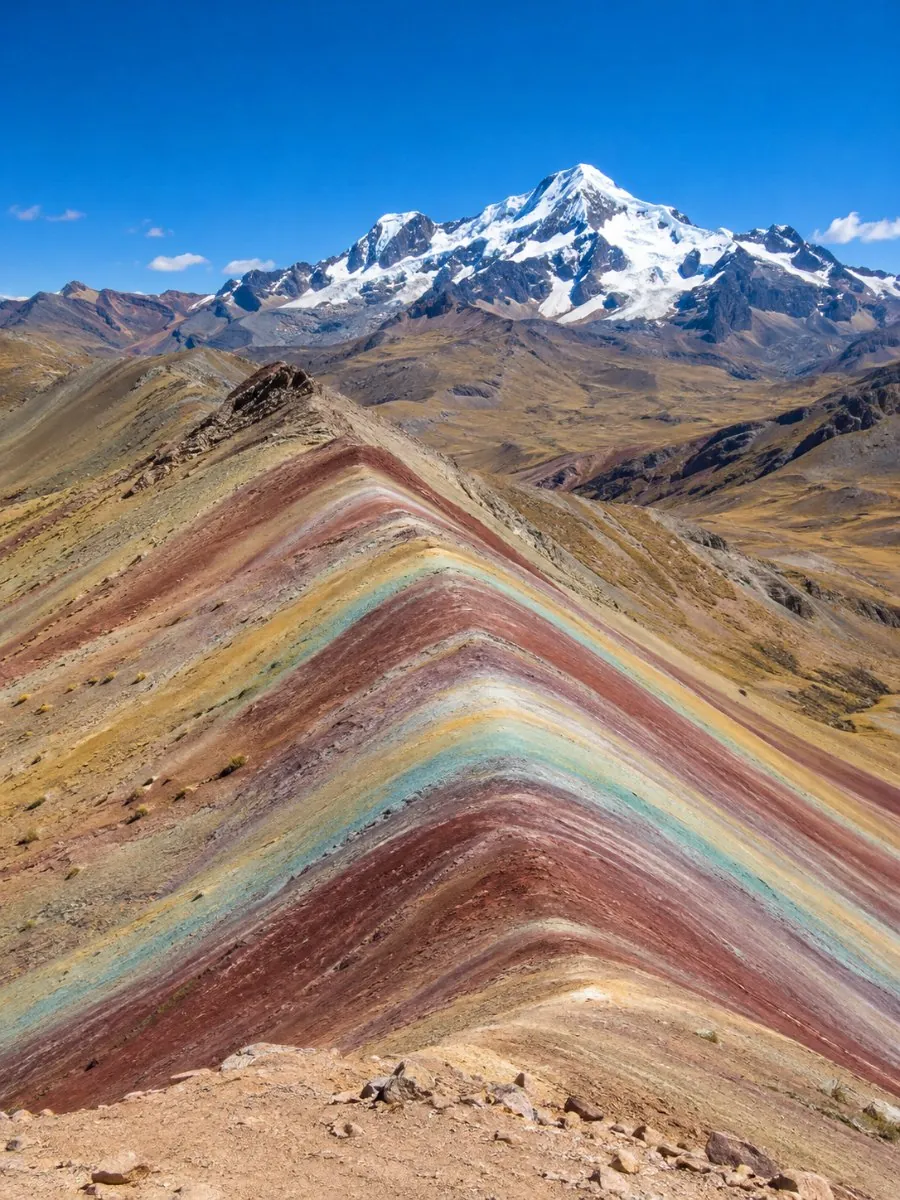
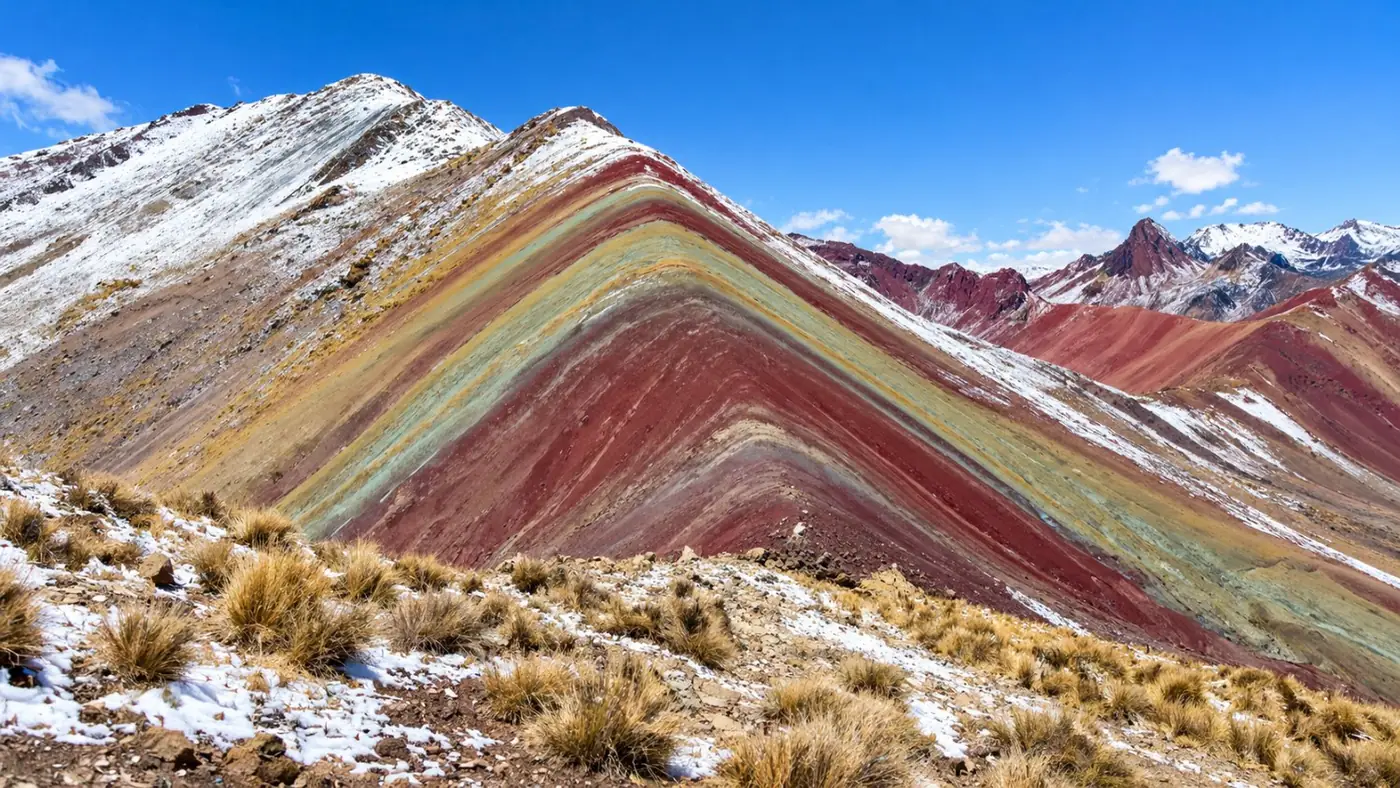
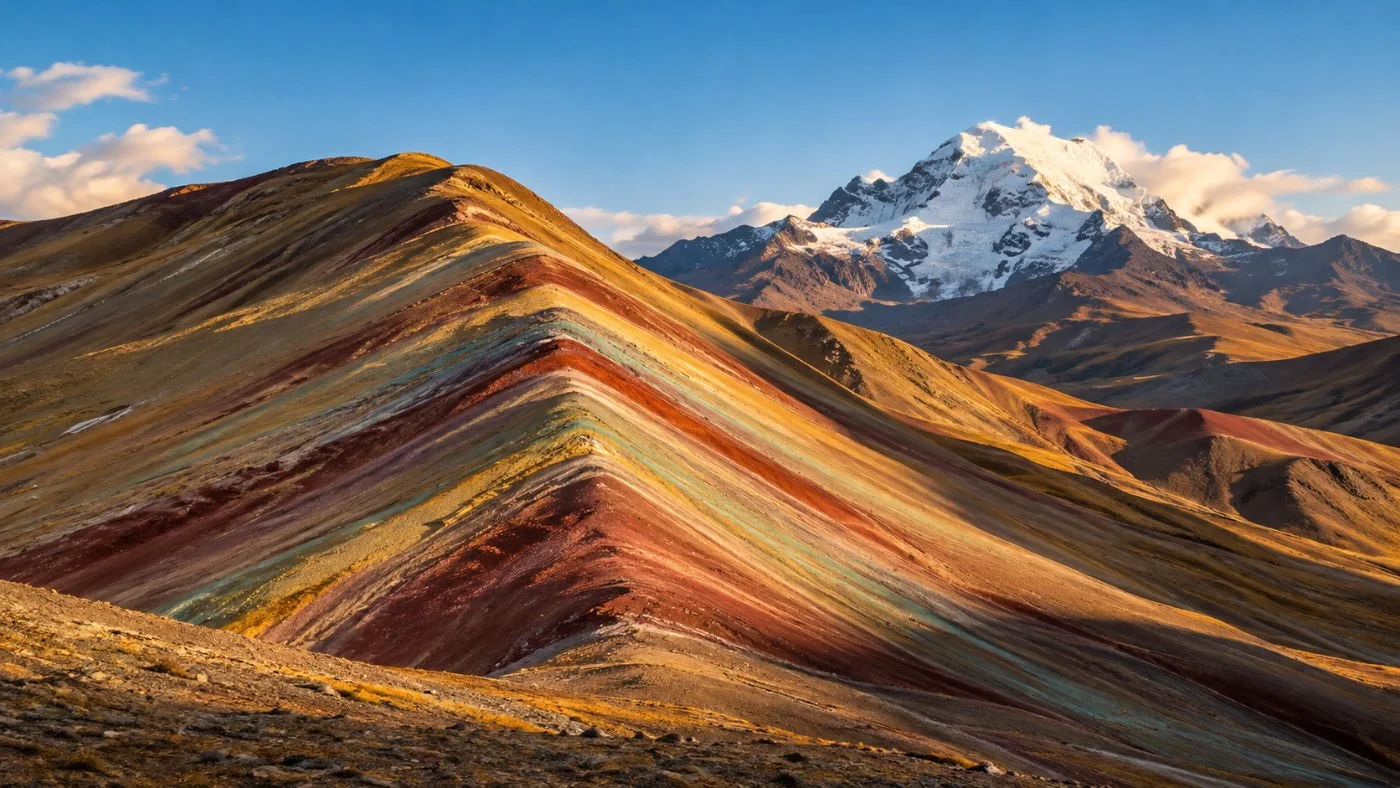
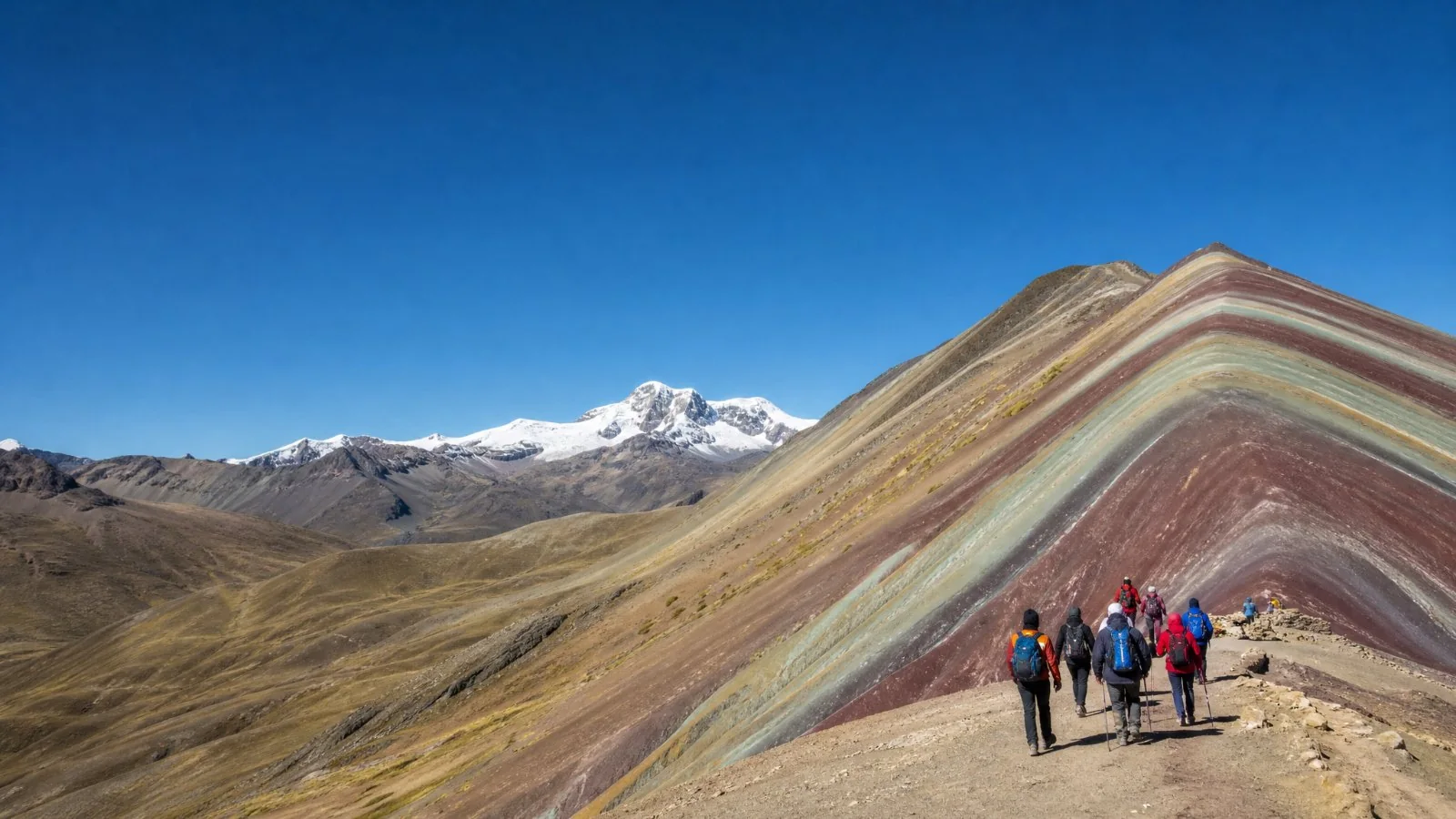
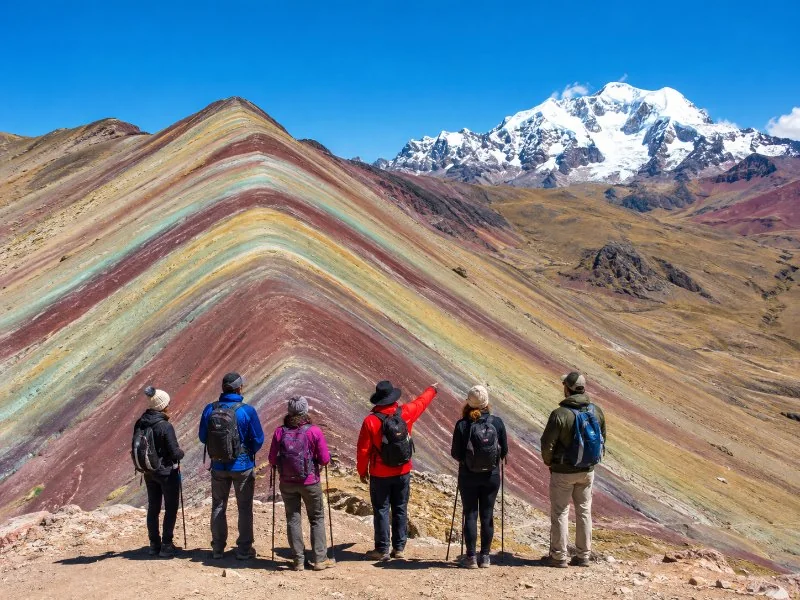
Vinicunca is the striped ridge at 5,036 metres in the Andes south-east of Cusco, coloured red, mustard and green by the minerals in its rock.
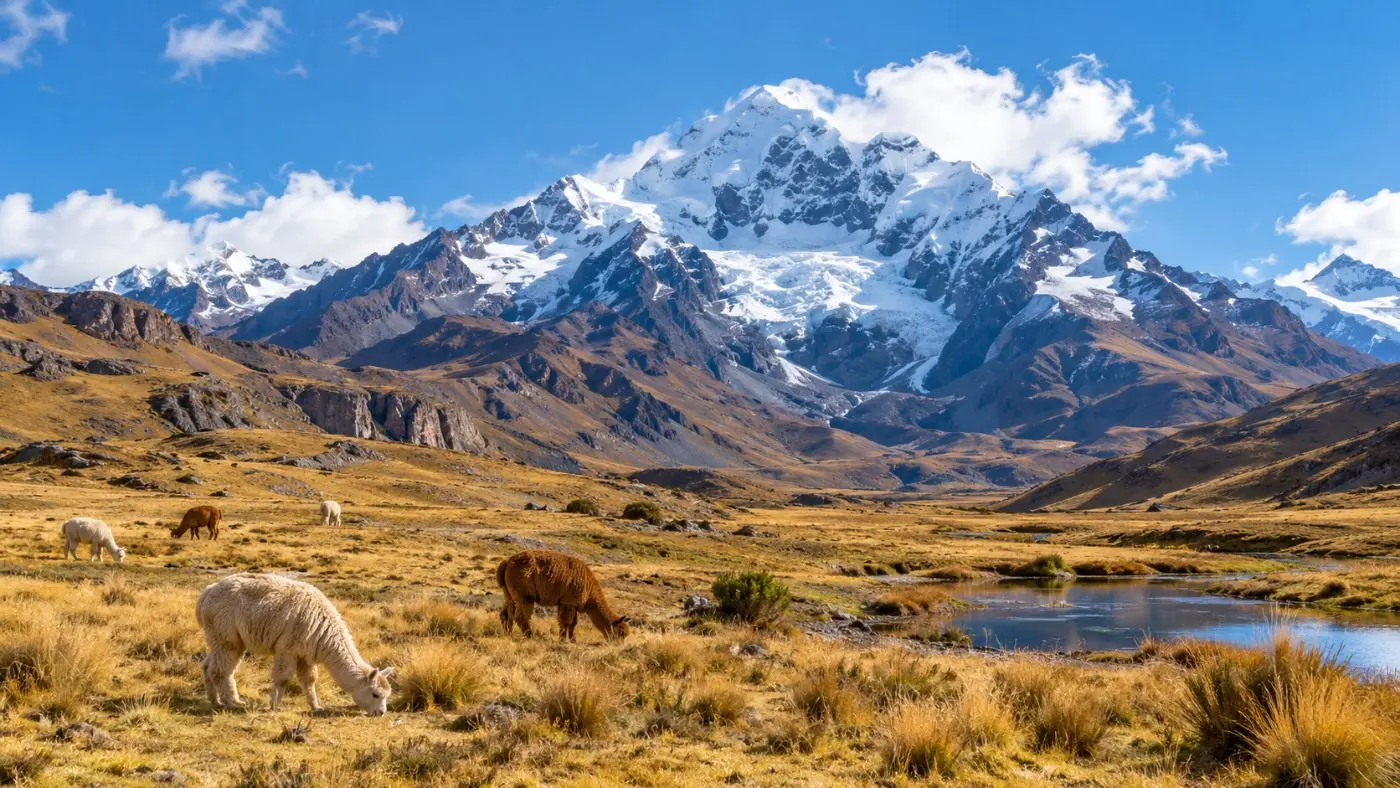
Climb the last slope past grazing alpacas, stand level with the glaciers of Ausangate, then look down into the rust-red folds of the Red Valley next door.
Entry fee, spelled outIncluded or paid at the trail, tour by tour
Ten tours, one tableHiking, ATV, private and Palccoyo days
Time on footMinutes of walking, not just trip length
Pickup and mealsHotel pickup and lunch on every tour here
Tours
Choose your Rainbow Mountain tour
In the centre, the classic hiking day that most people book. Either side, a small group with the
entrance fee already paid, and a quad-bike route through the Red Valley. Every card opens a full tour page.
A capped group of 15 with the entrance fee already paid. The guide sets a slower pace on the climb, and the Red Valley loop is offered on the way down.
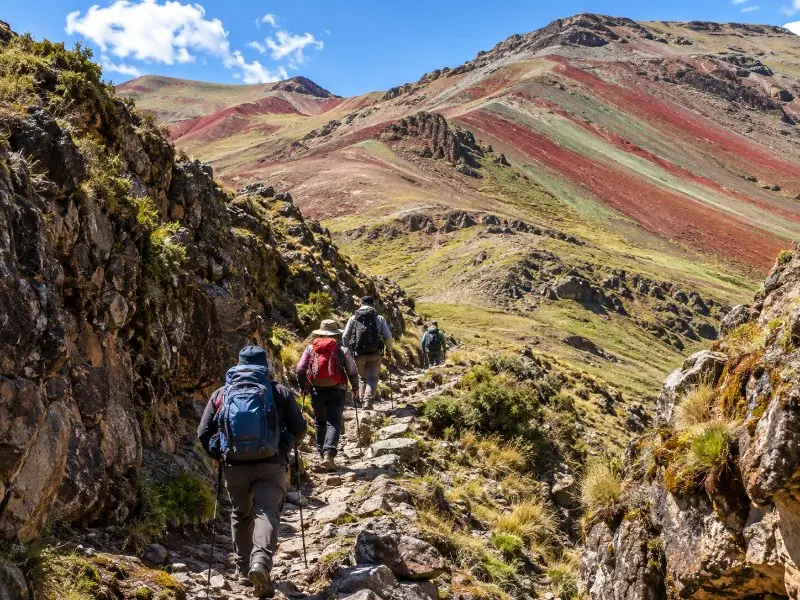
The classic day: a 3:30 am pickup, breakfast in Cusipata, then about 1.5 hours on foot to the summit. The entrance fee is paid in cash at the trail, and the Red Valley is an optional extra.
What's included
Hotel pickup in the historic centre (depends on option)
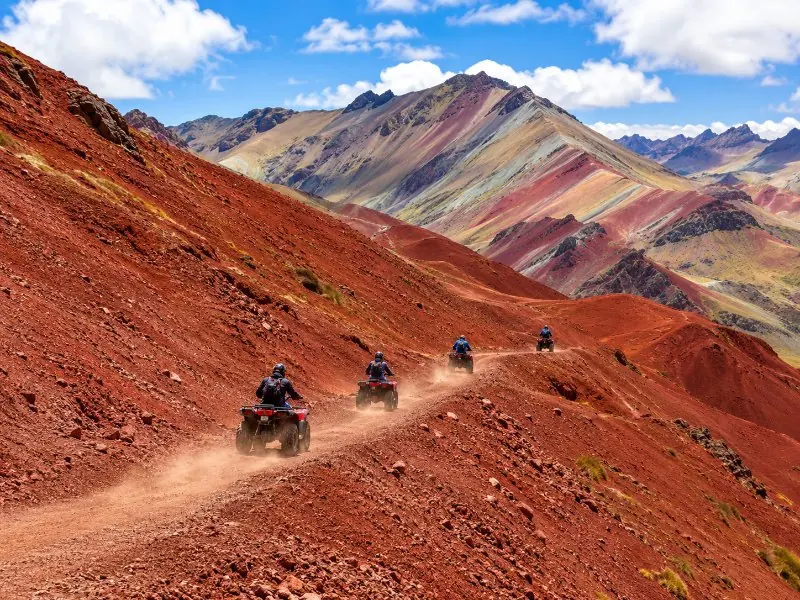
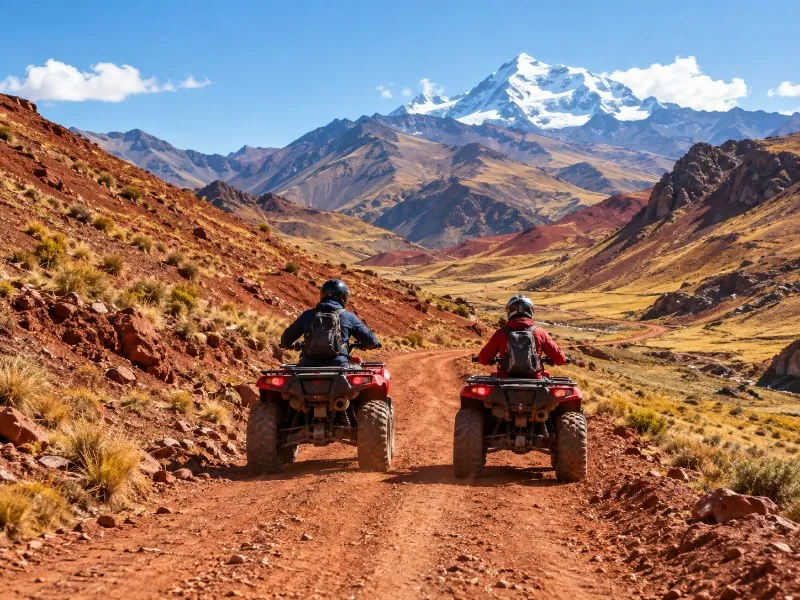
You ride a quad through the Red Valley after a short practice, then walk about 40 minutes to the viewpoint. The terms ask for some previous quad experience.
Three questions sort it out. How much do you want to walk at 5,000 metres? Do you want the entrance fee
in the booking or in your pocket? And how early can you face a pickup?
Hotel pickup in central Cusco and lunch come with every tour in this table. Where the entry is
paid on site, bring cash in soles: the fee is collected by the local communities at the trail.
Before you book
A short walk, a very long day.
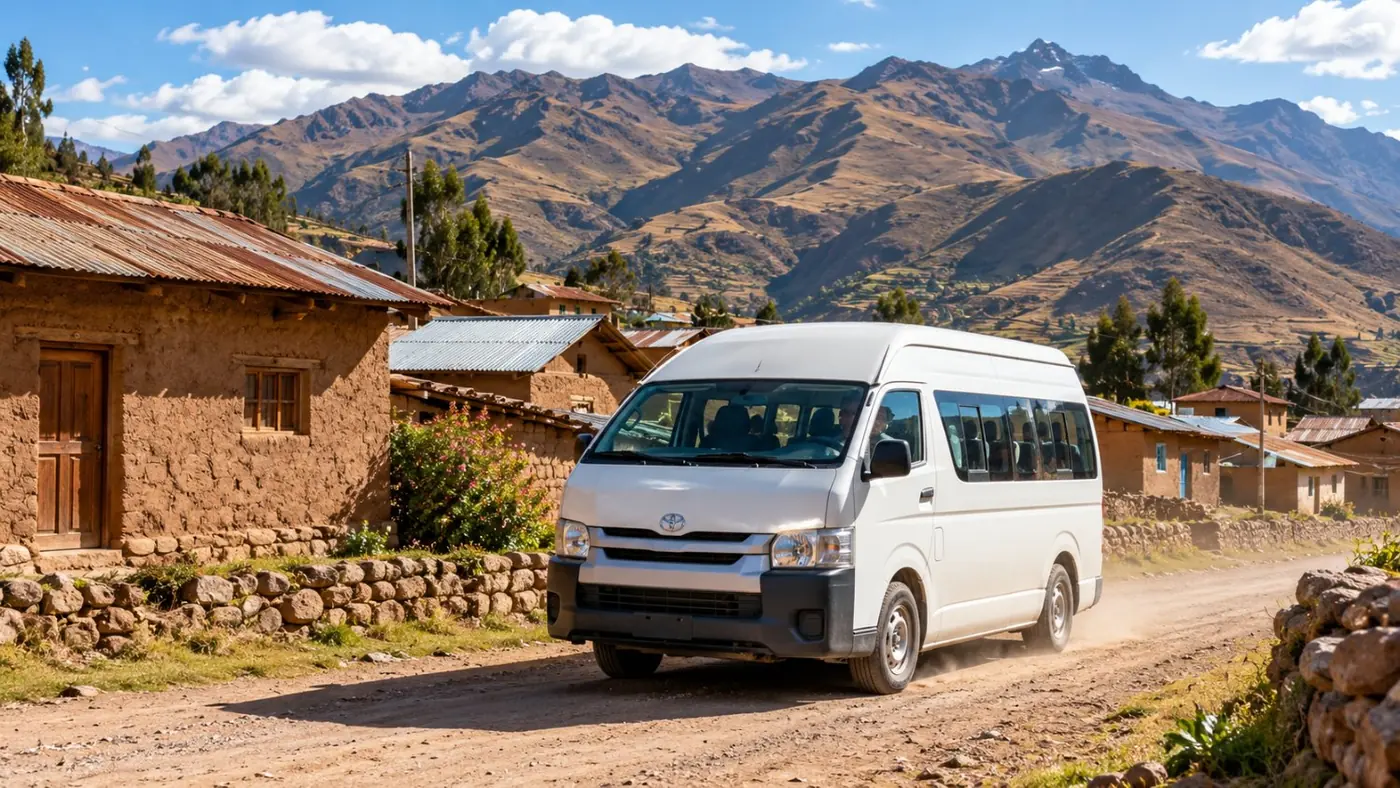
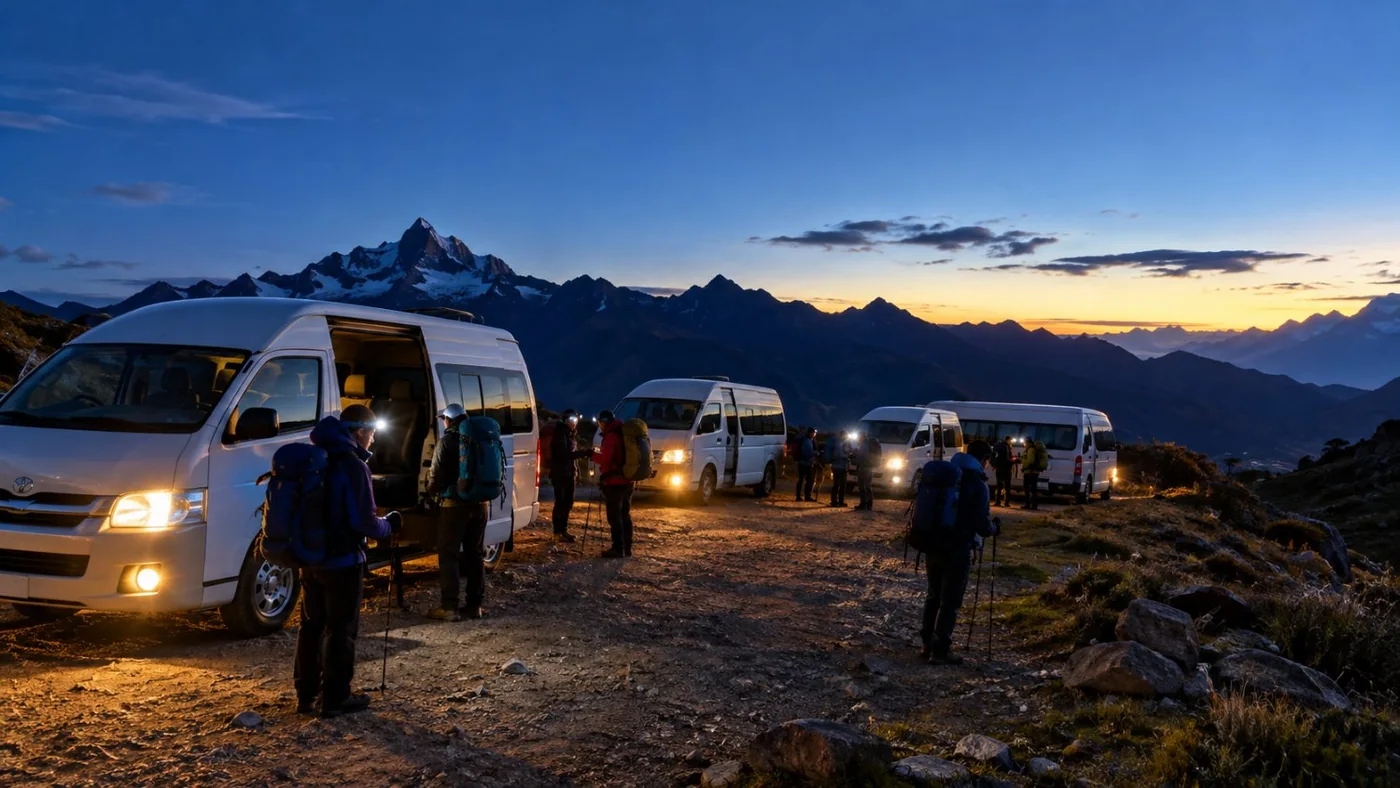
Almost every Rainbow Mountain tour from Cusco has the same shape. A minivan collects you between 3:00 and 5:00 in
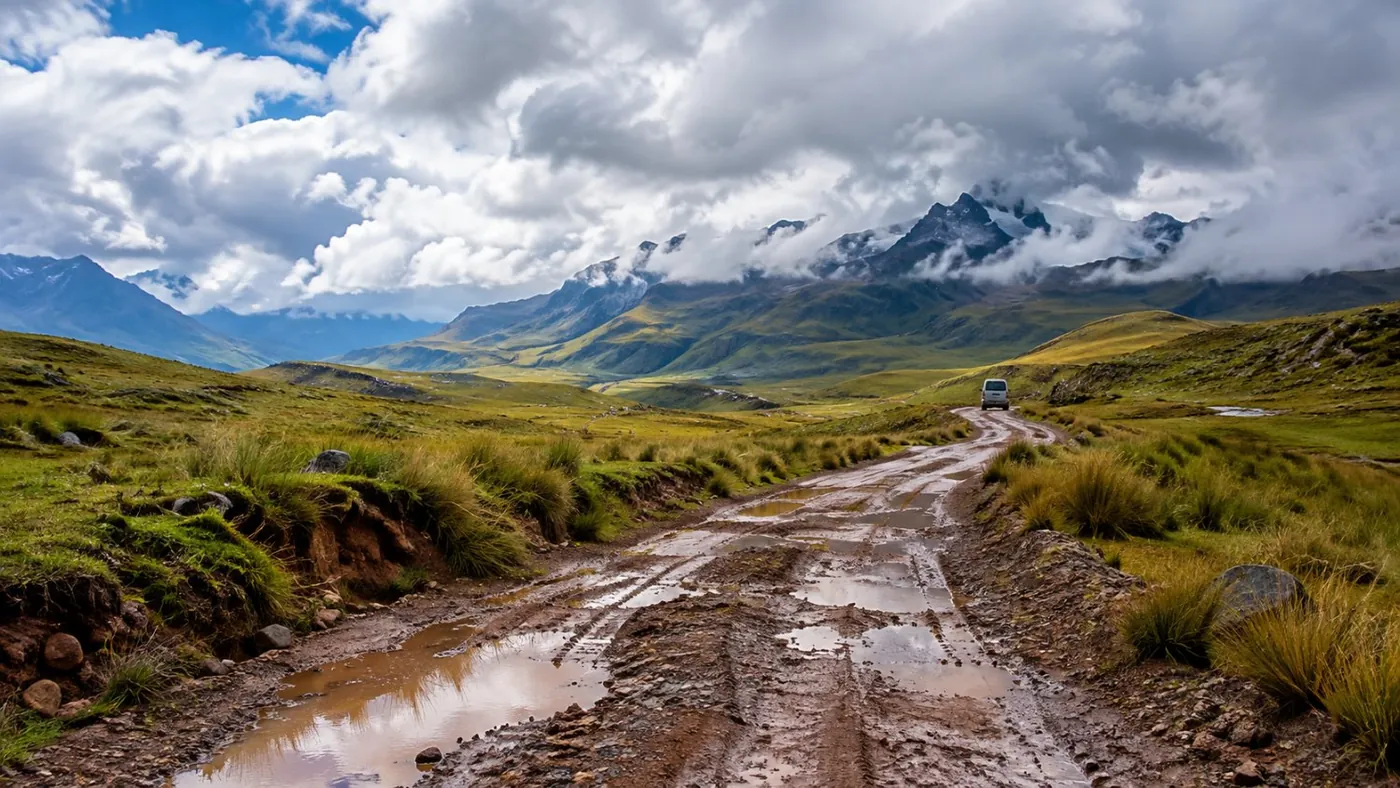
the morning and drives about two hours south to Cusipata for breakfast, then up a dirt road to a trailhead well
above 4,000 metres. From there it is a walk of half an hour to two hours to the viewpoint, a while at the top, and
the same way down to lunch and the long drive back. You are home by late afternoon.
What changes between tours is how much of the climb is on your own feet, and who pays the entrance fee.
On the classic hiking days the listings give about 1.5 to 2 hours up. On the quad-bike tours it can be 40 minutes,
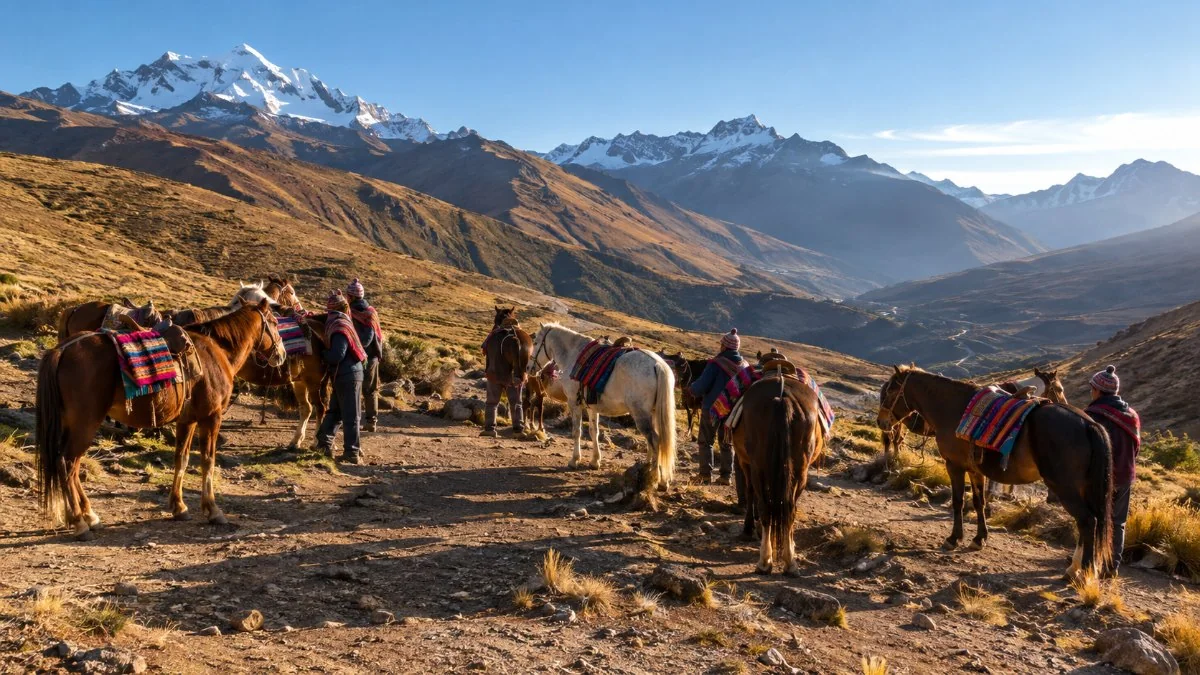
or about five. Horses, rented from local families at the trailhead, carry you most of the way on any tour. The
community fee at the trail is in some bookings and not in others, and the Red Valley next door has its own.
5,036
Metres at the summit, per the usual survey figure. That is
higher than Mont Blanc, and you get there in a single morning from Cusco, which is why acclimatising matters more
than fitness.
HikeHorseATVPrivate
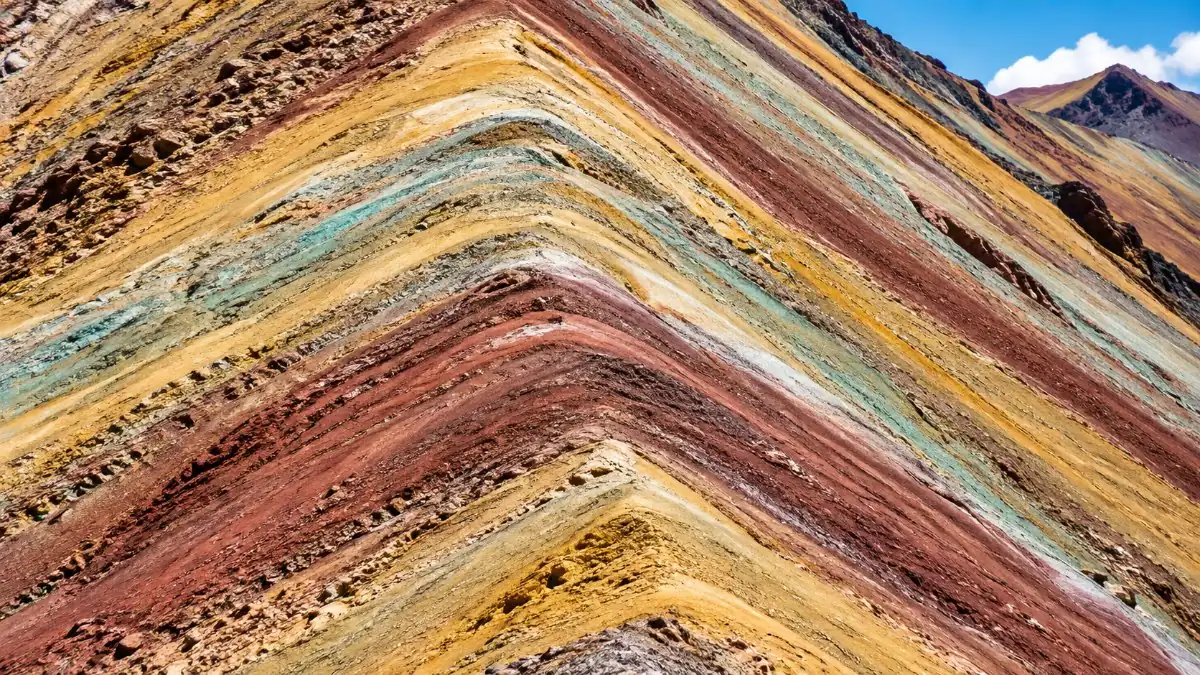
The stripes are layers of sediment: iron gives the reds, sulphur-rich sandstone the mustard.
01
Is it hard?
The walk is short. The altitude is not: most people stop every few minutes on the final slope.
02
When is it dry?
Roughly May to October. June and July can bring snow on the top; January and February are the wettest.
03
Is entry included?
On some tours. On others you pay the community fee in cash at the trail. Each card says which.
04
Who should skip it?
Anyone pregnant or with heart or breathing problems: every listing here rules them out.
Your day
How a Rainbow Mountain day runs
Twelve hours or so door to door, most of them in the van. This is the shape of it.
01
Pickup in the dark
The van collects you from your hotel in central Cusco, usually between 3:00 and 5:00 am. Collecting a full group can take half an hour.
3:00 to 5:00 am
02
Breakfast in Cusipata
About two hours south, a simple buffet in a village restaurant. Coca tea is on the table, and this is the last proper toilet stop.
About 2 hours' drive
03
The climb
Up a dirt road to the trailhead, then on foot, on a horse or on a quad to the viewpoint, with Ausangate's glaciers on your left.
30 min to 2 hours
04
Red Valley, then lunch
Time for photos at the top and, on many tours, a detour to the Red Valley. Then back down to Cusipata for a buffet lunch.
Back by late afternoon
Plan your trip
Plan your Rainbow Mountain day
Season, altitude, the cash you need and what to wear: one tab each.
May to October: the dry season and the busiest months. June is usually the driest.
June and July: the coldest nights. A dusting of snow can cover the top for a morning.
April, May, September and October: the months most local operators recommend, with good weather and fewer people.
November to April: the rainy season. January and February are the wettest, and clouds can hide the stripes.
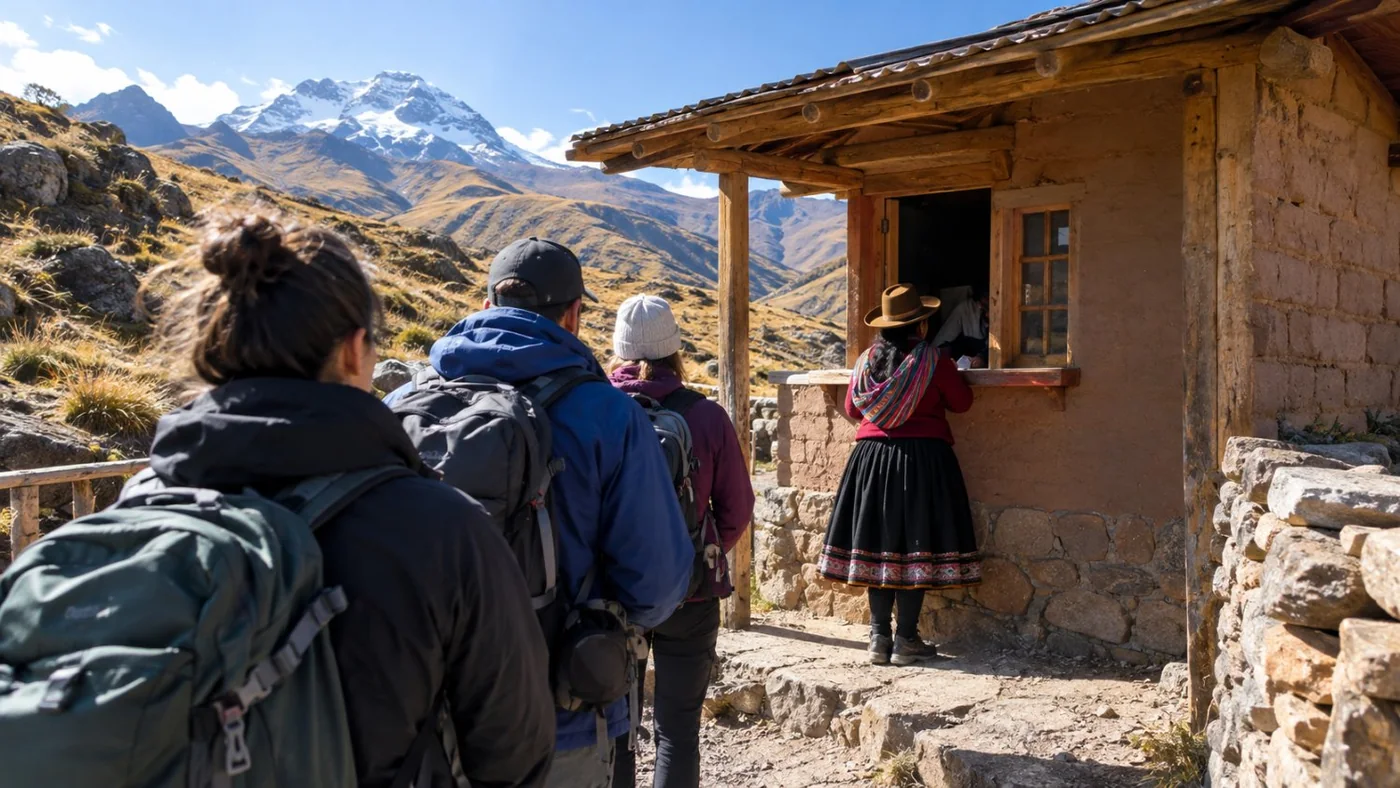
The entrance fee is collected by the local communities at the trail, in cash, in Peruvian soles.
The Red Valley has a separate, optional fee, paid the same way.
Horses are rented from local families at the trailhead, also in cash.
There are no cash machines once you leave Cusco. Bring small notes; change is scarce.
Rainbow Mountain is not on the Cusco tourist ticket (boleto turístico).
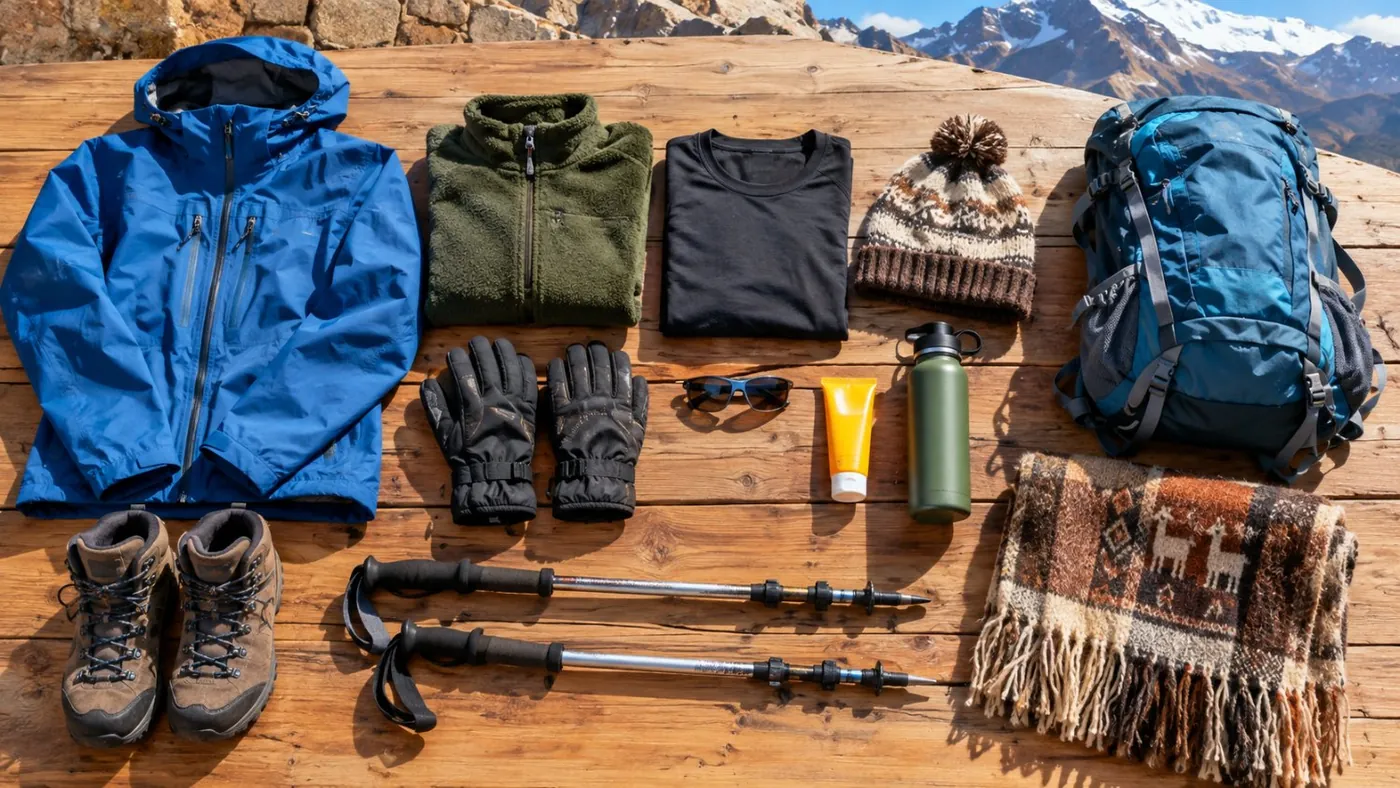
Layers: a base layer, a fleece and a waterproof shell. It is freezing at 4 am and bright at 10.
Hiking shoes with real grip. The path is dusty, loose and sometimes muddy.
Gloves, a warm hat, sunglasses and strong sunscreen. The sun at 5,000 metres burns fast.
Water, snacks and toilet paper. The full list is in the what to wear guide.
The driveAbout 3 hEach way from Cusco, with breakfast and lunch stops in Cusipata.
The summit5,036 mHigher than any peak in the Alps. Acclimatise in Cusco first.
On foot5 min to 2 hFrom a quad-bike drop-off to the full hike from the trailhead.
Red ValleyOptionalA detour on many tours, with its own fee at the trail.
Pickup3 to 5 amLater departures exist and reach the top after the first wave.
Refund24 hoursFree cancellation up to a day before on most tours here.
Where it is
Where Rainbow Mountain is
Three hours from Cusco, pickup included
Vinicunca, between the districts of Cusipata and Pitumarca, Cusco region
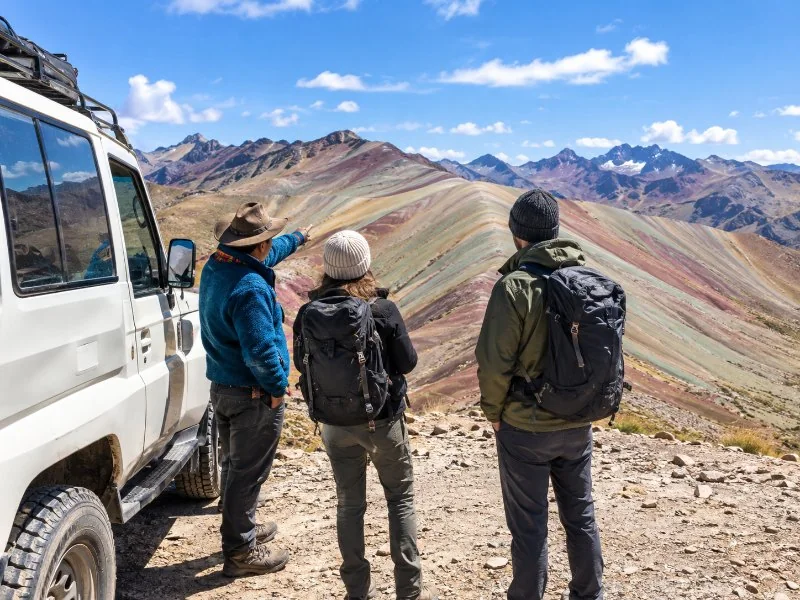
The mountain sits on the road to Ausangate, the great glaciated peak of the region. Most group tours take the
Cusipata side: breakfast in the village, then a dirt road up to the trailhead. A few use the Pitumarca road, which
is longer by van and shorter on foot. The quad-bike tours start from bases near the Red Valley. Every tour here
collects you in Cusco, so you never need to drive these roads yourself.
Cusco to Cusipata: about 2 hours
Cusipata to the trailhead: about 1 hour
Trailhead to the viewpoint: 30 minutes to 2 hours on foot
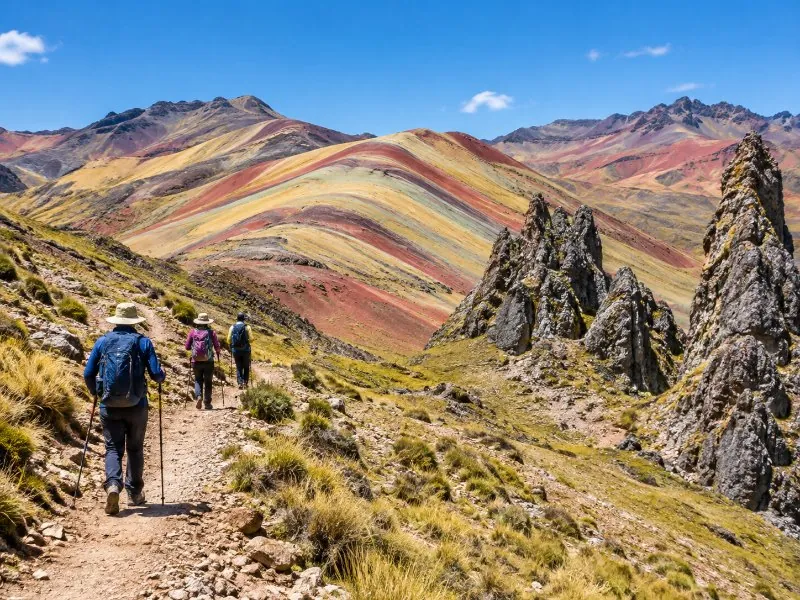
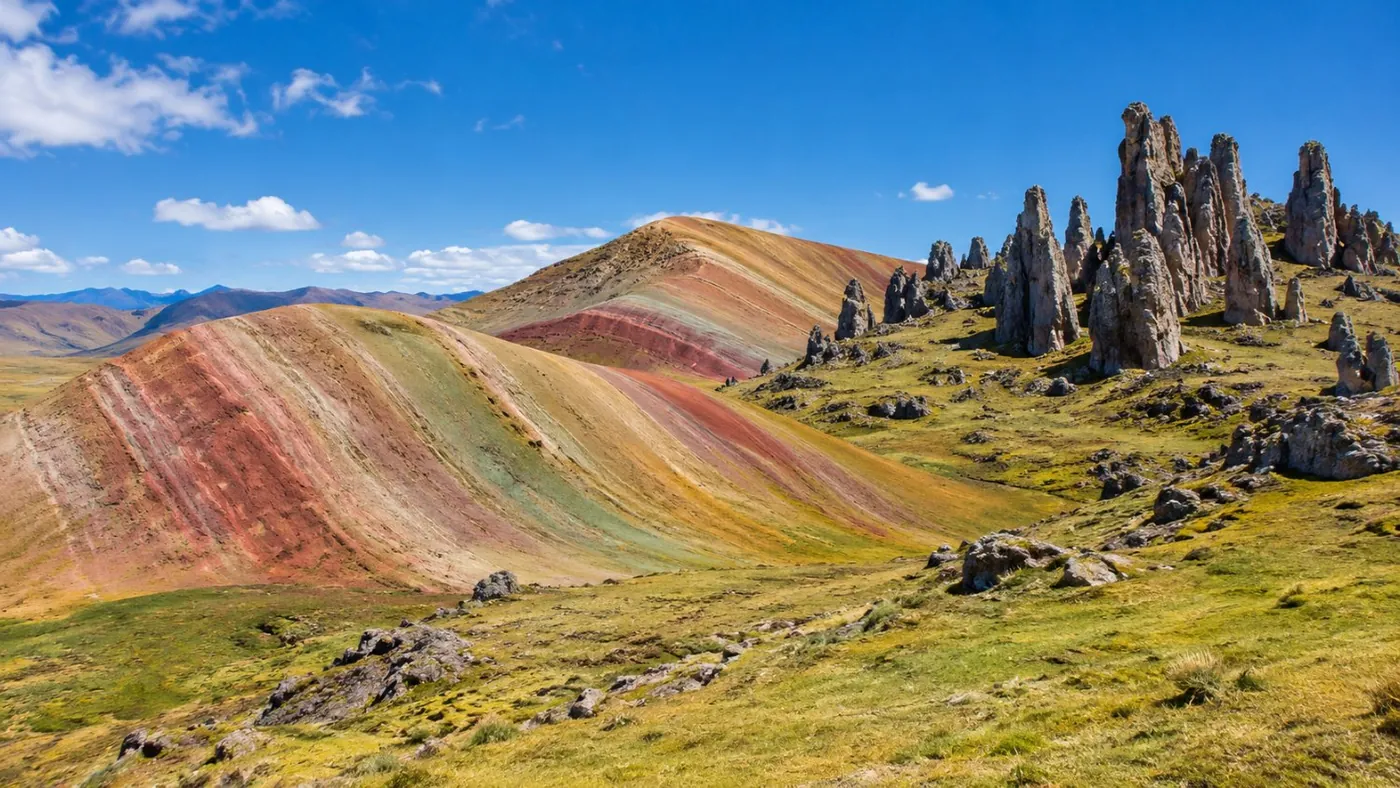
Vinicunca is the famous one. Palccoyo, in the Checacupe district further south, has three striped ridges, a stone forest and far fewer people. The walk is shorter and the climb gentler, though you are still near 4,700 m.
Vinicunca went from an unnamed ridge on a herders' path to one of the most visited sights in Peru in a few
years. Here is what you are actually going to see, and how to choose a day.
Where the colours come from
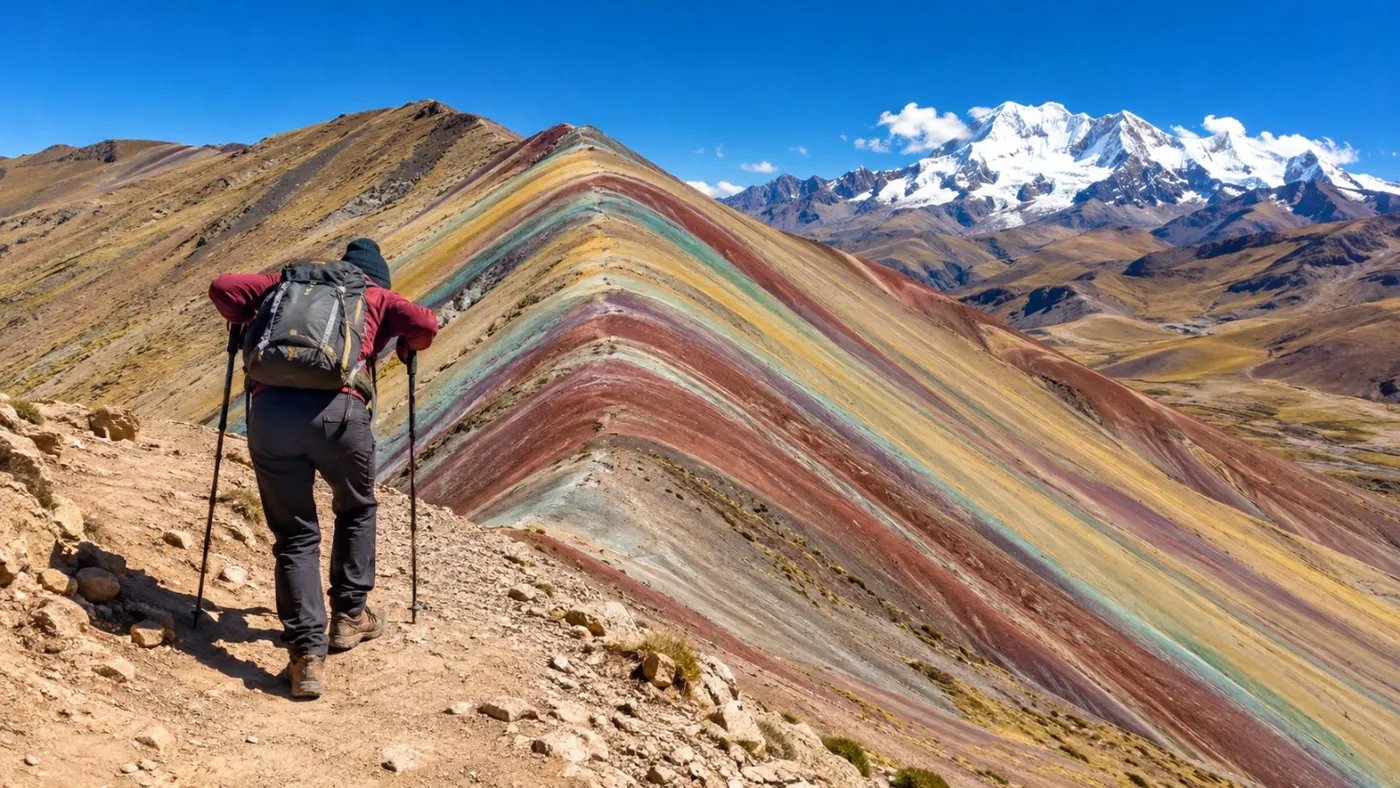
The stripes are layers of sediment, tilted on their side and worn down by weather. According to the Cusco office for
cultural landscapes, the reds come from iron-rich claystones, the white from quartz sandstone and lime-rich marl, the
green from clays rich in iron and magnesium minerals, and the mustard yellow from sandstone loaded with sulphur. Each
band is a different chapter of the rock, pressed flat and then lifted when the Andes rose.
For a long time snow and ice hid much of it. The caps had melted by around 2013, and within a few years the ridge
was all over social media. The pictures you saw were almost certainly edited. On a bright morning the colours are
strong; under cloud they turn soft and chalky. Both are real.
Up close, the bands are crumbly earth and rock, not paint.
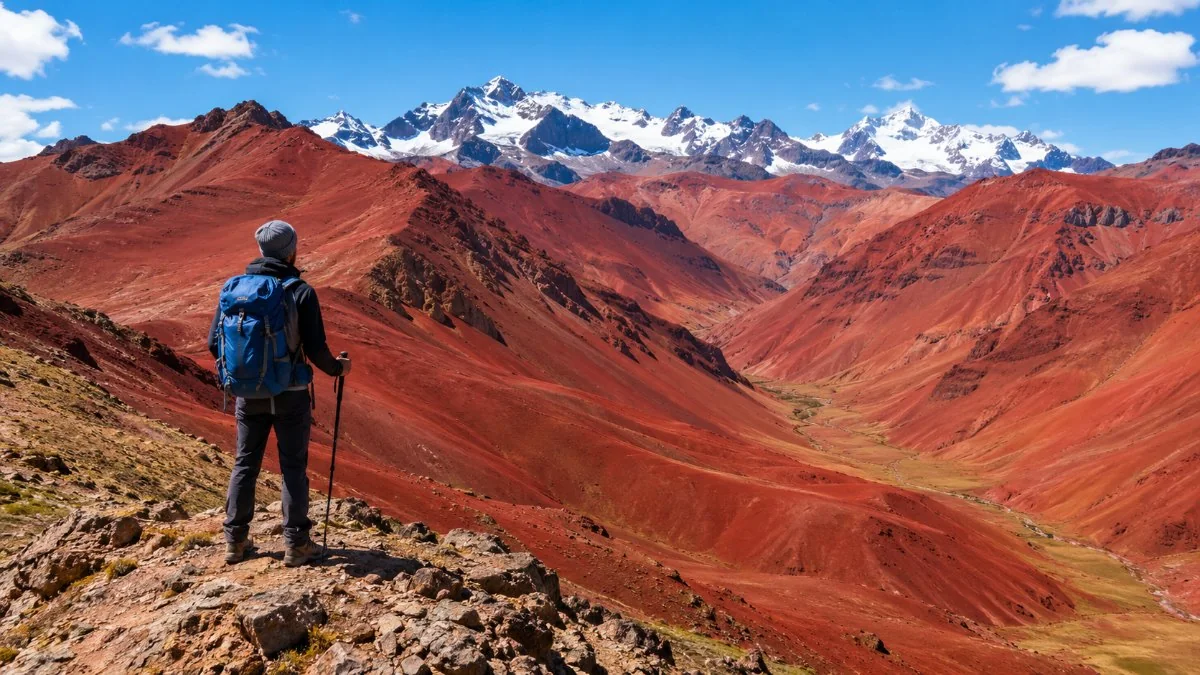
The Red Valley next door
Walk a few minutes past the main viewpoint and the land drops into the Red Valley: whole slopes of rust-coloured
earth, folded like cloth. There are no stripes, just one deep colour for as far as you can see. On a hiking tour it is
an optional loop on the way down with its own small fee at the trail, and it adds walking at altitude. On the quad-bike
tours you ride through it first. Plenty of guests come home saying it was the better part of the day.
The small print: the trip is 12 hours and the climb is short, so compare the time on foot, the
pickup time and whether the entrance fee is in the booking. Those three things separate the tours, far more than the
name on the listing. Each tour page lists all three first.
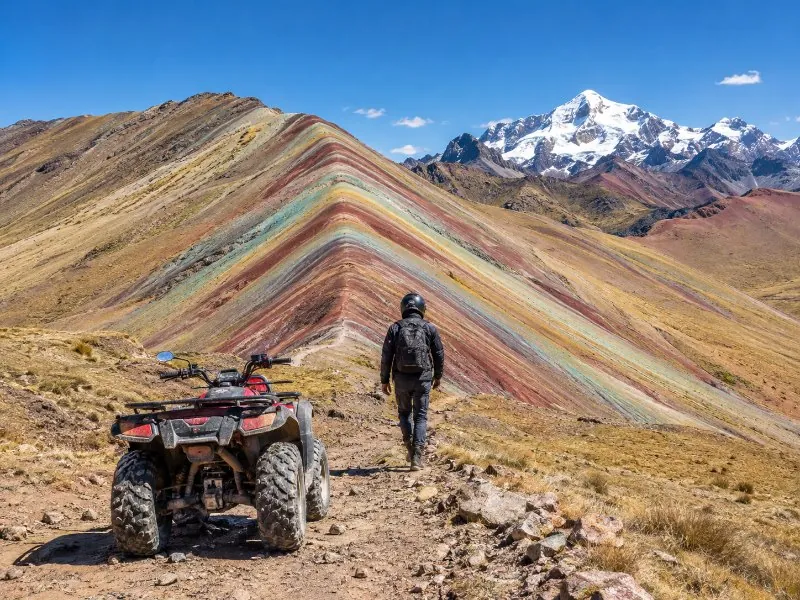
Hike, horse or quad?
On the classic hiking days you walk from the trailhead: a gentle valley first, then a steep final slope to a saddle
just above 5,000 metres. Most people stop every few steps near the top. If that sounds grim, every trailhead has
local families renting horses, which carry you most of the way up; you still walk the last steep stretch. The ATV tours
cut the walk to 40 minutes, 25, or about five, depending on the listing. You are at the same altitude either way, so
the headache does not care how you got there.
Horses are rented at the trailhead from families in the local communities.
The mountain belongs to someone
The mountain is not a national park. The entrance fee at the trail is collected by the local communities, and
the horses and drinks are sold by local families. In 2018 a mining concession covering the whole mountain was granted to a company that had asked
for it in 2015; after public protest, it gave the concession up in May that year, and the government later
announced a moratorium on mining in the area. The concession had overlapped the lands of the Chillihuani and
Pampachiri communities. Paying the fee, renting a horse and buying a drink at the trail are the
ways this tourism reaches the people who live up here.
Timing it
The dry season, from May to October, is the safe bet. Late April, May, September and October add thinner crowds.
In June and July a night of snow can whiten the top, and from December to March clouds and rain are common. Whatever
the month, put this day at the end of your time in Cusco: the longer your body has had at 3,400 metres, the better
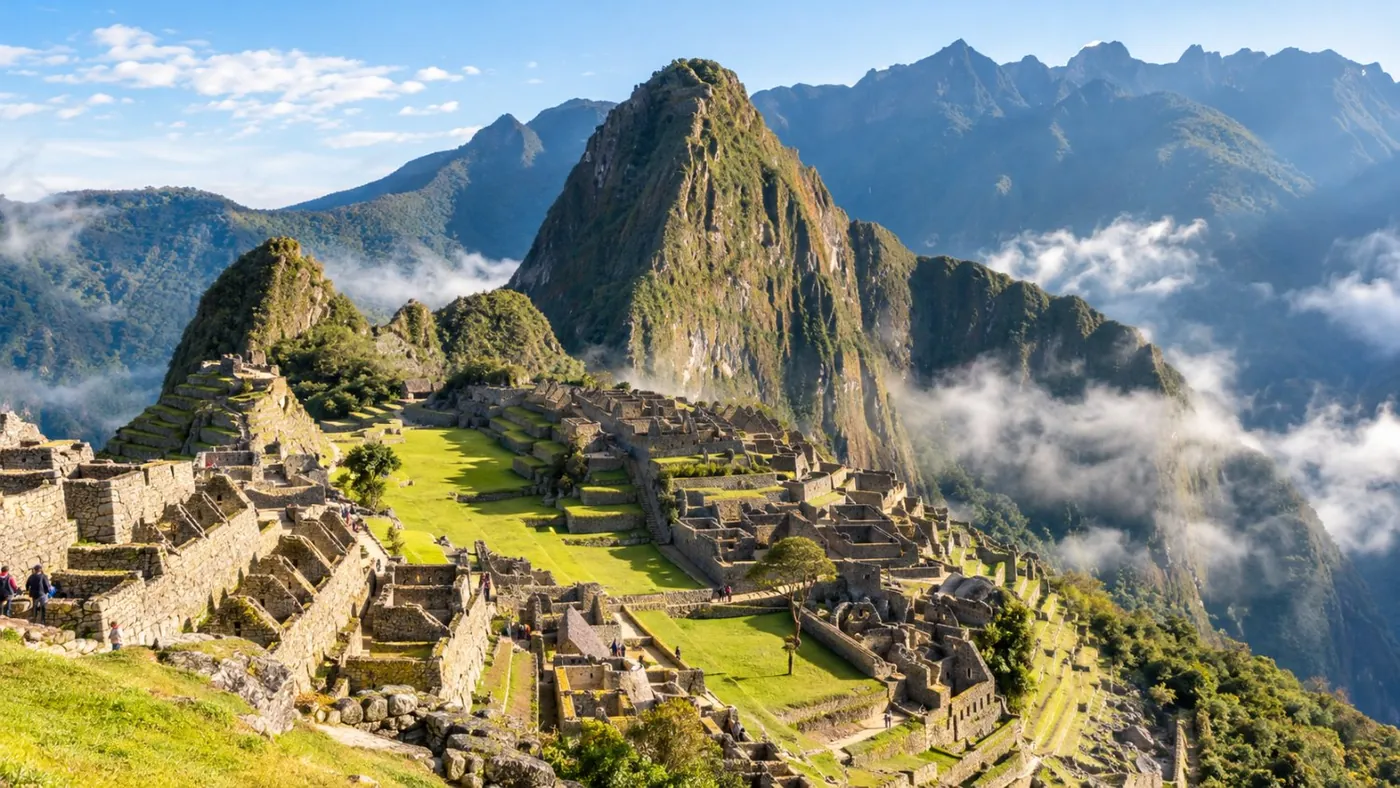
the last slope goes. Our Machu Picchu planning guide has the order.
The Red Valley lies just behind the main viewpoint.
Straight answers to what people ask most about Rainbow Mountain from Cusco.
Is Rainbow Mountain worth it?
For most people who have acclimatised, yes. The walk is short, the colours are real, and the Red Valley next door is a bonus. Go in knowing it is a 12-hour day with a 3 or 4 am pickup and a hard final slope at about 5,000 metres, and that the photos online are edited. If that sounds like too much, look at Palccoyo, the gentler alternative.
How long is the hike up Rainbow Mountain?
From the main Cusipata-side trailhead, the listings give about 1.5 to 2 hours up and about an hour down, on a path of roughly 3.5 km each way. The valley part is gentle; the last 30 minutes to the viewpoint are steep. On the quad-bike tours the walk drops to 40 minutes, 25 or about five. Each tour page gives its own time on foot.
Do you need oxygen for Rainbow Mountain?
Most people do not, and most tours here carry emergency oxygen. The summit is at 5,036 metres, so spend two or three days in Cusco first, drink water, walk slowly and turn back if you get a severe headache, confusion or breathlessness at rest. Our altitude guide covers the signs.
Can you do Rainbow Mountain without a tour?
Yes. Public minivans run from Cusco towards Cusipata and Pitumarca, and from there you need a local taxi or colectivo up to the trailhead, very early. You pay the community fee in cash at the trail. Most travellers find a tour simpler, because it bundles the 3 am transport and two meals. The independent route is explained step by step.
Is the entrance fee included in the tour?
It depends on the tour. Some listings include the community entrance fee, others leave it to be paid in cash at the trail, and the Red Valley always has its own separate fee. Each card on this page says "Entry included", "Entry paid on site" or "Entry: ask first". It is not covered by the Cusco tourist ticket.
What is the best time to visit Rainbow Mountain?
The dry season, May to October. April, May, September and October are often recommended for good weather with fewer people. June and July can bring snow on the summit, and January and February are the wettest months. More in the best time to visit.
Should I visit Rainbow Mountain or Machu Picchu first?
Machu Picchu first. It is lower than Cusco, so it is an easy day for your body, and it buys extra time at altitude before Rainbow Mountain, which is the highest thing most visitors do in Peru. See how to fit both into one trip.
What should I wear to Rainbow Mountain?
Layers: a base layer, a fleece and a waterproof jacket, plus gloves and a warm hat for the cold start. Hiking shoes with grip, sunglasses and strong sunscreen. A trekking pole helps on the way down. The full list is in our what to wear guide.
Can I see Rainbow Mountain without hiking?
Almost. The ATV tour with no hiking stops about five minutes on foot from the viewpoint, and on any tour you can rent a horse at the trailhead for most of the way up. You are still at about 5,000 metres, so the altitude applies either way.
How far is Rainbow Mountain from Cusco?
About 100 km south-east by road, or about three hours each way including the breakfast stop at Cusipata. A tour with hotel pickup is the usual way to go, which is why the day runs from about 4 am to late afternoon.
Which rainbow mountain is best, Vinicunca or Palccoyo?
Vinicunca is the famous one, with the bigger view and the Red Valley next door. Palccoyo has three striped ridges, a stone forest, a gentler walk and far fewer people. Compare them in Palccoyo or Vinicunca.
Can I cancel a Rainbow Mountain tour?
Most tours on this site cancel for a full refund up to 24 hours before. The Pitumarca small-group listing does not state its policy, so check before you book it. Weather is not guaranteed on any tour.
Ready to book
Pick your way up, pick your morning.
Hotel pickup, breakfast and lunch on every tour here, and free cancellation up to 24 hours before on most.

 Small group
★ 4.812 hoursFree cancellation
Small group
★ 4.812 hoursFree cancellation